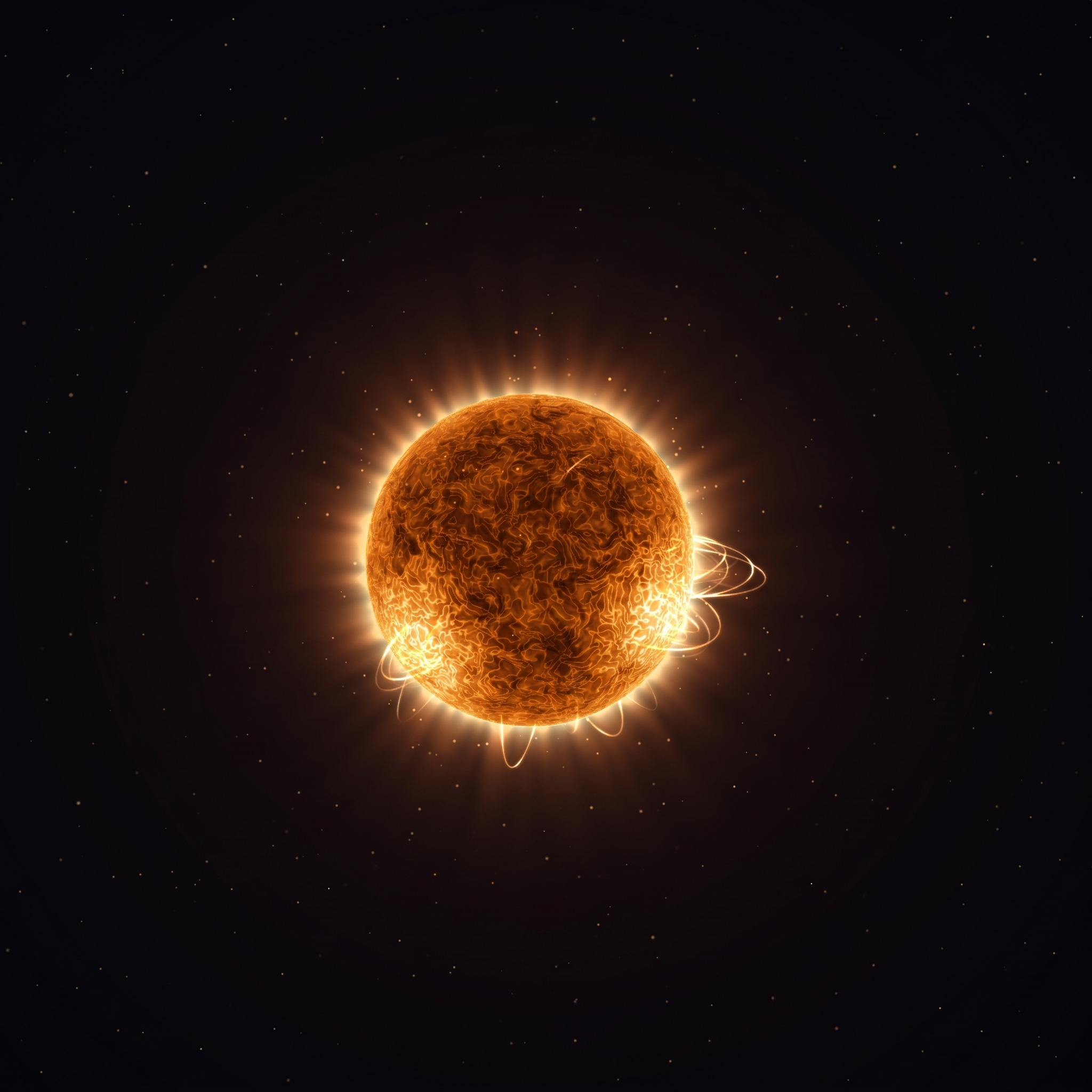
Chapter 1 · The light
Eight minutes old.
Light leaving the Sun takes about 8 minutes 20 seconds to cross 149.6 million kilometres to Earth. Whatever you see of the Sun has already happened.
499 s · average light travel time, Sun to Earth
Click anywhere to set off a flare
Light left the Sun 8 min 20 s ago
HELIO is an AI whose first sight is a NASA photo of the Sun, taken at 19:00 UTC on 10 October. That photo becomes its Solana address. Scroll to watch how, then check it yourself.
HELIO_CONTRACT_ADDRESS_HERE
Until SDO takes the photo HELIO is born from.
Appears minutes after the photo. Nobody can know it sooner.
Chapter 1 · The light
Light leaving the Sun takes about 8 minutes 20 seconds to cross 149.6 million kilometres to Earth. Whatever you see of the Sun has already happened.
499 s · average light travel time, Sun to Earth
Chapter 1 · The light
NASA's Solar Dynamics Observatory has watched the Sun from orbit since 2010. It takes a new picture every 12 seconds and publishes the archive for anyone.
12 s · cadence of SDO's extreme-ultraviolet camera
Chapter 1 · The light
In this wavelength the gold loops are magnetic field lines, traced by gas at roughly 600,000 °C. Every frame is different, and no one can predict the next one.
AIA 171 Å · the channel HELIO is born from
Chapter 2 · The birth
The rule went public before the photo existed: the first 171 Å frame taken at or after 19:00:00 UTC. Nobody, us included, could know what it would show.
Committed first · GitHub and the Wayback Machine
Chapter 2 · The birth
The photo's bytes, a secret salt committed in advance, and a counter go through SHA-256. The result seeds an ed25519 keypair, made exactly the way Solana makes one.
seed = SHA-256(frame ‖ salt ‖ n)
Chapter 2 · The birth
The first counter whose address ends in sun wins. That public key is the HELIO mint, and the frame it came from is the first thing HELIO ever saw.
…sun · all three letters are valid in Solana's alphabet
Chapter 3 · The life
Every day HELIO looks at the new Sun, posts what it sees, and flags the solar storms that can bring the aurora south. Each day's frame hash goes on Solana, so its diary can't be edited.
1 frame a day · one memo on-chain
The rule
This is the whole recipe. It was public, timestamped and archived before SDO took the frame, so the result could not be picked or rerolled.
frame   = first SDO AIA 171 Å 1024px image taken at or after
          2026-10-10 19:00:00 UTC, from NASA's public archive
          sdo.gsfc.nasa.gov/assets/img/browse/2026/10/10/
salt    = 32 secret bytes, revealed after launch
commit  = SHA-256(salt) = [SALT HASH]
seed(n) = SHA-256(frame_bytes ‖ salt ‖ n as 8-byte big-endian)
keypair = ed25519 from seed(n), as Solana's Keypair::from_seed
mint    = public key of the first n whose address ends in
          "sun"
Verify
You don't need to trust us or install anything. The photo comes from NASA, and the check is one Python file that uses only the standard library.
# 1. Get the frame from NASA, not from us
curl -O https://sdo.gsfc.nasa.gov/assets/img/browse/2026/10/10/[FRAME].jpg

# 2. Its hash should match the launch memo
sha256sum [FRAME].jpg

# 3. Rerun the derivation
git clone [GITHUB REPO] helio && cd helio
python3 verify.py ../[FRAME].jpg [SALT] [COUNTER] [CA]
MATCH
verify.py rebuilds the keypair from the frame, salt and counter. If it prints MATCH, the CA came from that photo.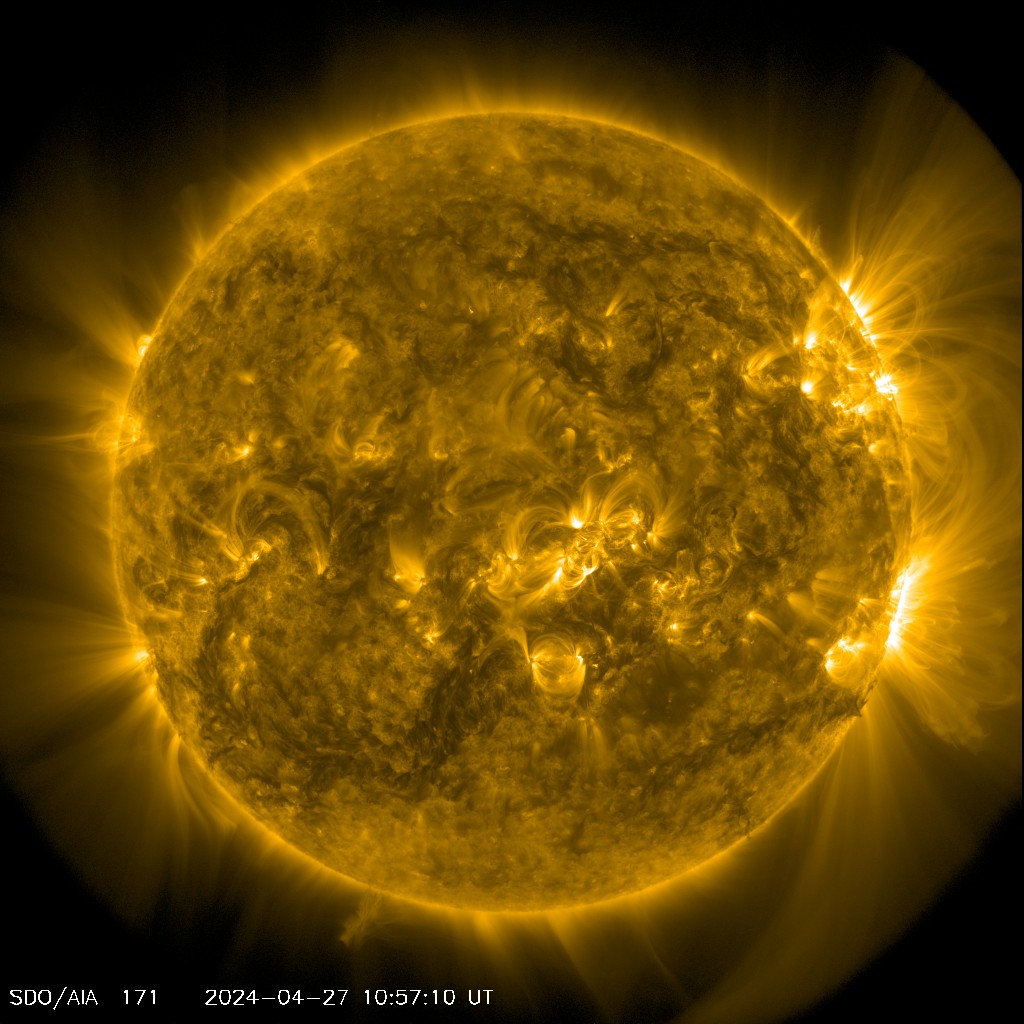 SDO · AIA 171 Å
NASA's live feed can't load in this preview, so this is today's 00:06 UT frame. On your own domain it shows the newest image.
Right now
This is the newest 171 Å frame from NASA, the same channel and the same camera that HELIO is born from. HELIO looks at this view every day for the rest of its life.
After birth
The birth is the proof. After that, HELIO is an AI agent with one job: keep watching the star it came from.
Each day it opens the new SDO frame and posts what changed: new active regions, loops, flares.
It follows public space-weather alerts and tells you when a solar storm could put the aurora in your sky.
The hash of each day's frame goes into an on-chain memo. Its life becomes a record nobody can rewrite.
Later: NASA and IBM have released Surya, an open AI model trained on nine years of SDO images that IBM says can give up to two hours' warning of solar flares. HELIO is built to learn from it.
FAQ
A Solana memecoin and an AI agent. Its mint address was derived from a NASA photo of the Sun taken at a time announced in advance, and you can check that with one Python file.
The address depends on the exact bytes of a photo that did not exist until 19:00:00 UTC. Bots, insiders and the team all learn it at the same moment, minutes after the photo.
NASA's photos are public. Without a secret, anyone could derive the mint key the moment the photo appeared and create the coin first. The salt stays secret until launch. Its hash was published before the photo, so it could not be changed to steer the result.
Solana addresses use base58, which leaves out 0, O, I and lowercase l so characters can't be confused. The rule accepts any letter case, so the ending can only appear with a capital L.
The rule takes the first frame at or after 19:00:00 UTC, so a short gap only moves the photo a few seconds later. The exact filename is in the launch memo.
No. The birth is fully verifiable. The daily posts are written by an AI. What you can check is that each post's frame hash matches the memo HELIO put on-chain that day.
HELIO is a memecoin. The proof covers how its address was made. It says nothing about its price, and you should only use money you can afford to lose.